It was just at the times of Reconquest when the new Order of Cistercians was founded in southern France, in Citeaux (Burgundy) in 1.098 AD.
Following more profoundly the Rule of Saint Benedict, they are even known as Bernardines or White Monks, because of the white cowl worn by monks.
The Cistercian monks came to Catalonia from Occitania in southern France founding monasteries Santes Creus, Poblet and Vallbona, the mighty Cistercian Triangle in Catalunya Nova – southern part of today´s Catalonia, reconquered by Ramón Berenguer IV.

The high importance of Cistercians during Middle Age was above all due to contribution to the medieval society:
- Economical aspect – creating farms, cultivation of olives, carob, grapevine etc…
- Architectural aspect – starting with Romanesque style they have been widely extending Gothic style.
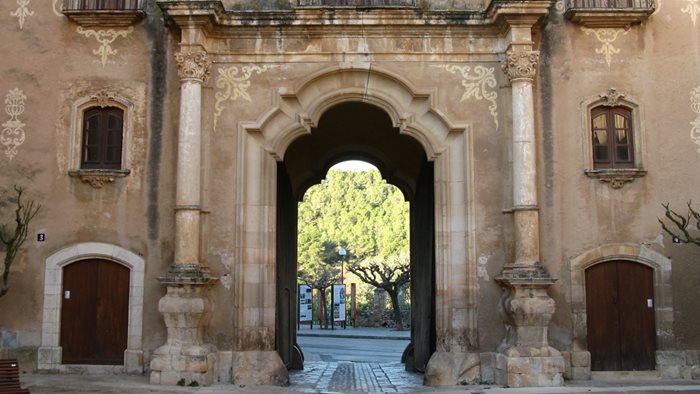
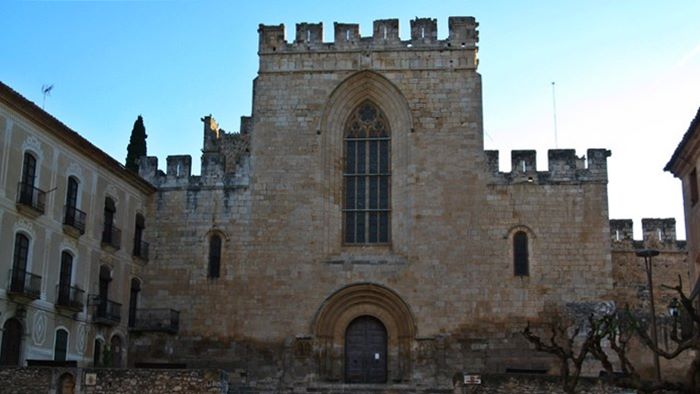
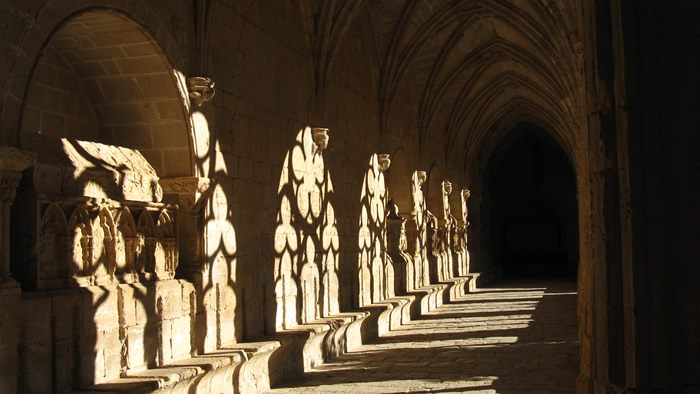
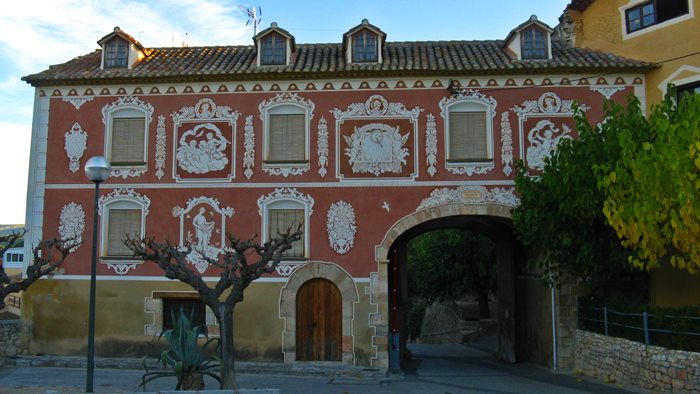
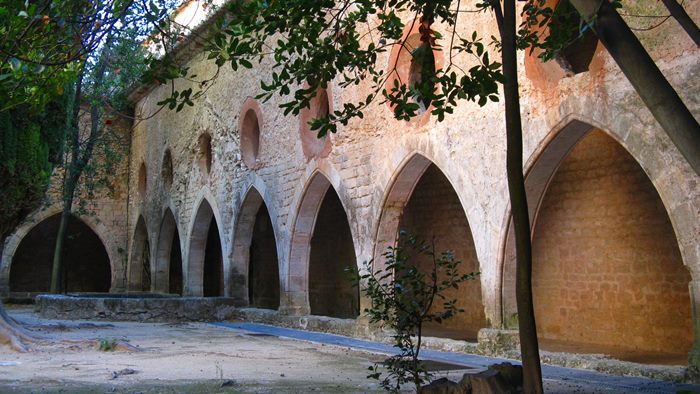
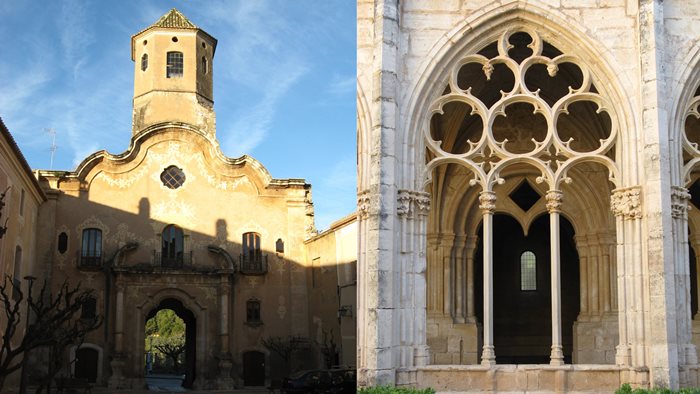
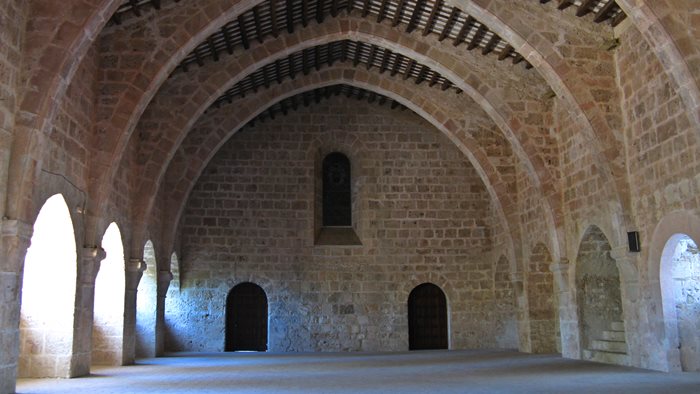
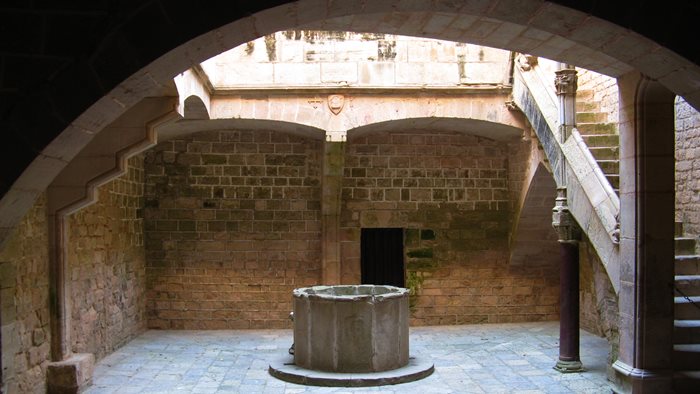
In 1.174 AD monks start the construction of monastery after previous donation of terrain in Santes Creus. Rich in water and exceptional terroir makes it adequate place for sustainable economy of monastery.
Soon the monastery had been obtaining more local donations to buy more terrain to rise its economical power.
Year 1.921 – monastery declared National Monument.
Architecture
Monastery of Santes Creus is following Cistercian architectural rules including: church, cloister, chapter house, dormitory.
In generally the monastery is divided in two parts:
- Interior part – church, cloisters, dormitory, chapter house
- Exterior part – houses where workers and staff were living
Church
Typical Cistercian scheme while the the church is positioned left and front cloister on the right. The orientation of church: east-west with a plan of basilica, squared apse including 5 chapels and 3 naves. The construction started in 12th century showing characteristic constructive elements of Cistercian architecture.
Monks are coming to pray eight times per a day: Maintines, Laudes, Prima, Tercia, Sexta, Nona, Vísperas, Completas.
Two spectacular royal tombs are covering remains of Peter III of Aragón – the first one, while second tomb belongs to his son James II of Aragón and his wife Blanch of Anjou.
Front Cloister
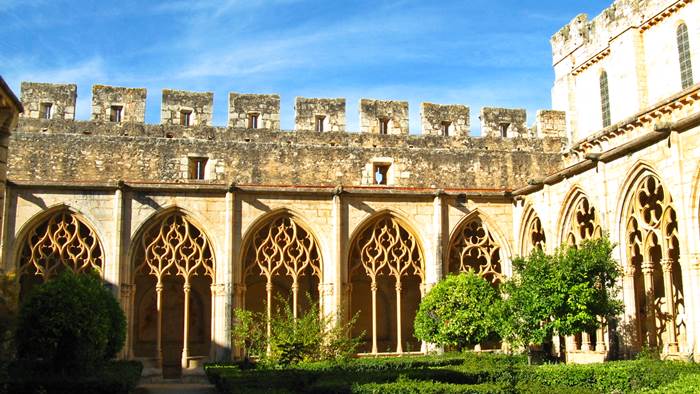
The construction started in 1.313 AD as a consequence of donation of James II of Aragón and his wife.
It´s a beautiful example of Gothic style designed by English architect Reinard of Fonoll and finished by his Catalan disciple Guillem Seguer. Thanks this the cloister shows variety of decorative elements of English and Catalan school.
Rear Cloister
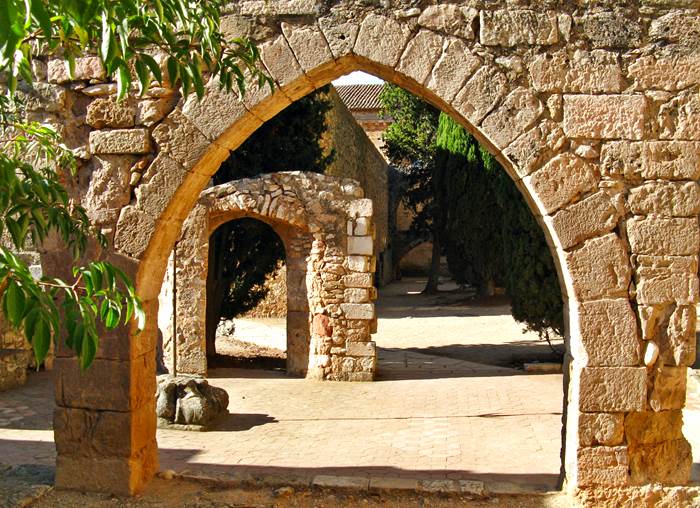
The origin of rear cloister is not sure but there can be found important parts of monastery like:
- Wine Cellar – space where the wine was produced although originally it seemed to be scriptorium.
- Royal Palace – used by Kings of Aragón as a temporal residence.
- Trinity Church – simple Romanesque church of one nave, one of the oldest parts of monastery.
References
- Royal Monastery of Santes Creus
- Map: Santes Creus, Tarragona Province
- ALTARRIBA Emilia, BALUJA Josep, Santes Creus, La Bola C.B. 2010.
- Monuments de Catalunya, 03/2024 from https://patrimoni.gencat.cat/en/monuments/monuments/royal-monastery-of-santes-creus
 TRAVELLING SPAIN