An impressive city, heritage of Roman Empire founded in 25 BC when emperor Gaius Julius Caesar Augustus finished the conquest of northern part of Hispania. Located today within the city of Mérida – Extremadura, is signed under the UNESCO World Heritage Site since 1993.
Build in excellent place, near the river Guadiana became the capital of province Lusitania and the most western city of Roman Empire. The reason of foundation of Emerita Augusta was to house soldiers retired from Cantabrian Wars:
- Legio V Alaude – legion founded in 52 BC by G. J. Caesar
- Legio X Gemina – known since 58 BC
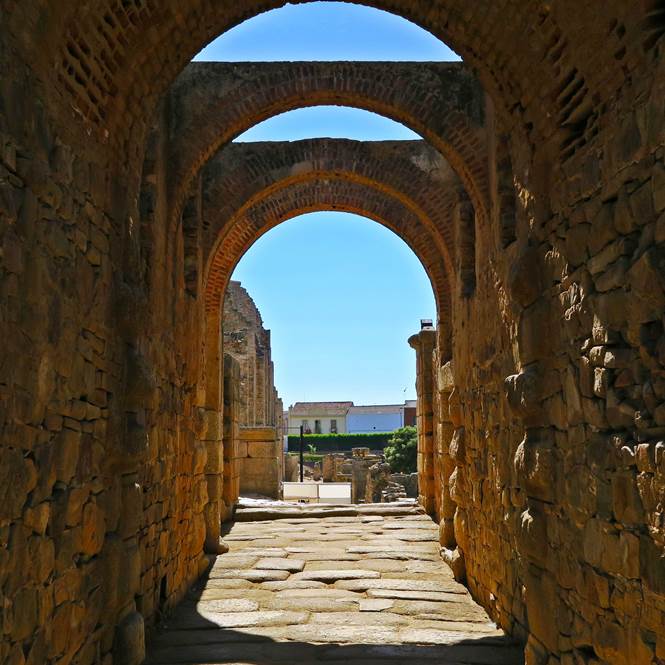
The perfect location of city next to river Guadiana and at the junction of two important Roman Ways (Via Romana) called
- Via de la Plata – connecting Emerita Augusta with northern city Asturica Augusta, today Asturias
- Via XXV (A-25) – connecting Emerita Augusta with Toletum (today Toledo and finishing in Caesaraugusta (today Zaragoza)
supposed the city to become important center of Roman Empire. That success came during Flavian and Antonine dynasties governing the whole Hispania and northern part of Africa.
At that time the most splendor pieces were built like amphitheater, circus many manner houses or aqueducts.
Later during the Visigoths, the city kept its fame prolonged even during the Moorish domination. The decline started after when the Reconquest passed through Extremadura.
Architectural Legacy
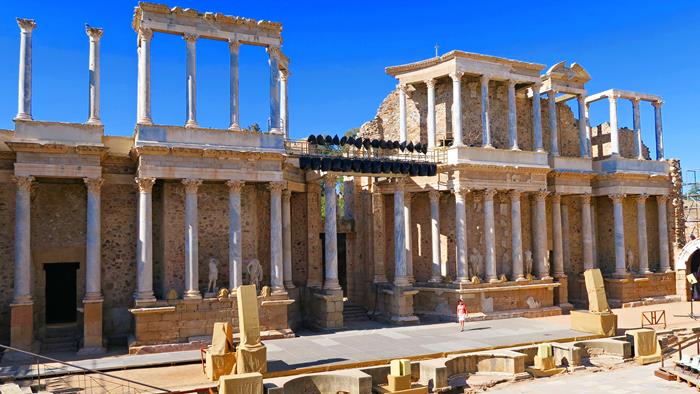
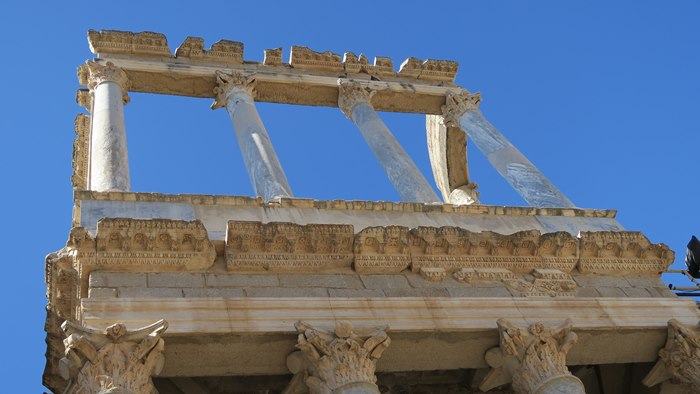
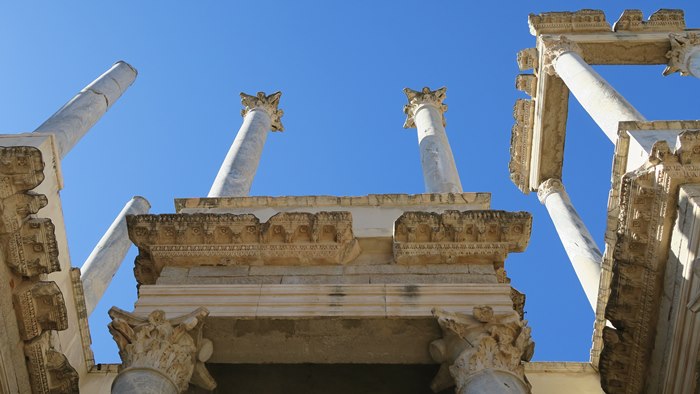
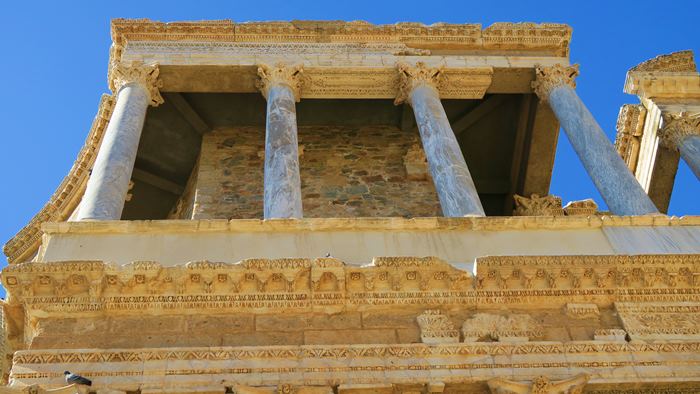
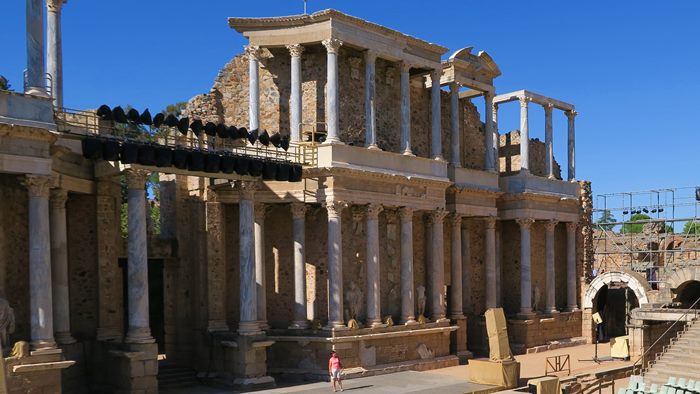
Roman Theater
One of the oldest pieces in Mérida, built around 16-15 BC according to the inscription inside the theater.
Reconstructed few times, the most important in the 1st century when the actual stage was erected, another significant reconstruction came in 4th century obtaining new decoration. The capacity was over 5.000 persons.
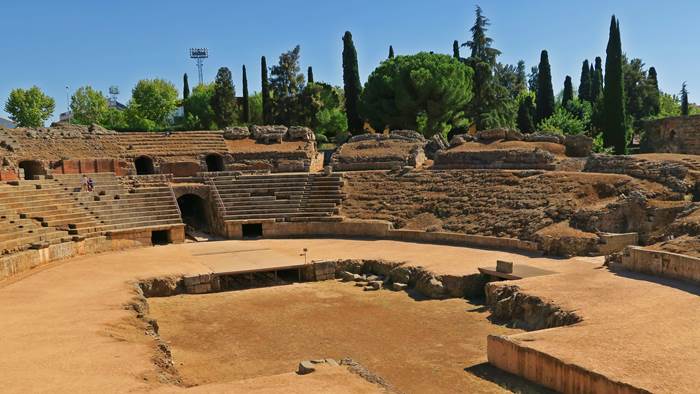
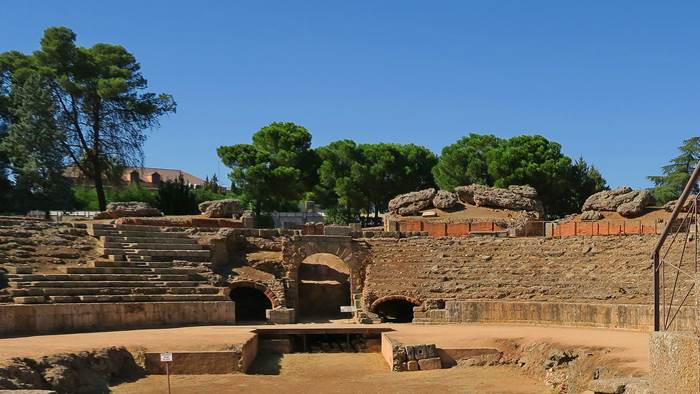
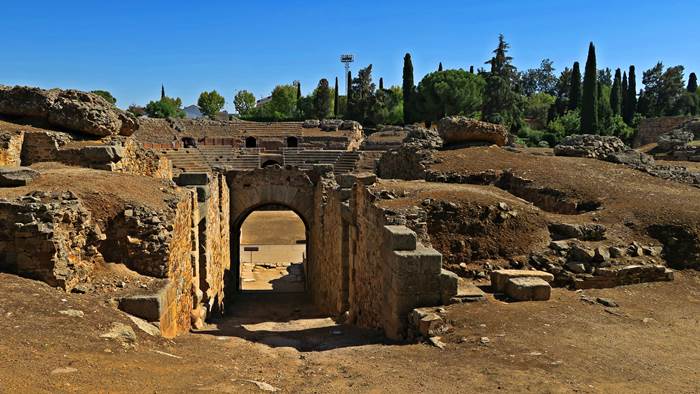
Amphitheater
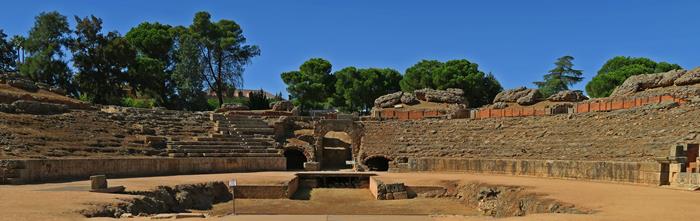
Partly ruined amphitheater, above all on upper part, it was planned together with theater and built later around 8 BC.
Place dedicated to gladiatorial fights and even to fights with beasts or fights between beasts.
Circus
Built towards 20 BC belongs to the biggest circuses around the Roman Empire used for chariot races – a sport really popular already in ancient Greek and even more in Roman Empire.
Roman Bridge
Amazing piece of civil architecture of Emerita Augusta is arched bridge over the river Guadiana built at the beginning of the city in 1st century BC.
Although there were few modification and a lot of maintenance during ages, in generally it keeps its original Roman style.
Water System
The water scheme of Emerita Augusta is another excellent example of civil architecture of Roman Empire.
Although the date of construction is unknown, the water here was supplied by 4 different aqueducts to cover rising demand when the population of the city was growing:
- Acueducto de los Milagros (Aqueduct of Miracle) – until now the best preserved, brought the water from Proserpina Damn, located any 6 KM north-west from Emerita Augusta.
- Acueducto San Lázaro (San Lazaro Aqueduct) – this had been supplied from underground springs located north from city.
- Acueducto de Cornalvo / Aqva Avgvsta (Cornalvo Aqueduct) – the oldest one brought water from Cornalvo Damn located in the east any 20 KM away.
- Acueducto de las Abadías (Abbey Aqueduct) – recently discovered is still under the investigation.
Diana Temple
The temple located directly on the forum was built in the 1st century AD and dedicated to the Imperial cult.
Other Monuments
- Arch of Trajan
- Mithraeum House
- Columbarios
- Forum Gate
- Roman Baths San Lázaro
- Bridge over Albarregas river
- Castellum Aqvae – water reservoir in the city
References
 TRAVELLING SPAIN