Impressive medieval city and important stop on St. Jacob´s Way preserving immense and excellent Gothic jewels signed under the UNESCO Heritage.
Population: approx. 174.451 hab (2023)
Altitude: 859 m.a.s.
Area: 107 KM2 (MAP)
The city of Burgos, beautifully built along the river Arlanzón, was inhabited already during Neolithic and Bronze Age. Traces can be seen on “Cerro del Castillo” – actually castle of Burgos or nearby on famous archaeological site “Atapuerca“.
But the real foundation of the city goes back to 884 AD when Diego Rodríguez Porcelos, Conde de Castilla (Count of Castile) was sent to resettle valley along the river Arlanzón and to found city by King Alfonso The Great.
Being on the St. Jacob´s Way, Burgos was gaining the importance quickly and during the 10th century already became big city.
Around 930 AD became capital of Condado de Castilla (County of Castile – geographically included Kingdom of Asturias and Kingdom of León) and later capital of Castilla La Vieja.
Since the discovery of Americas and posterior colonialism, the city of Burgos got long decline until the 20th century when industrialization caused a new success and consolidation of the city.
Monuments
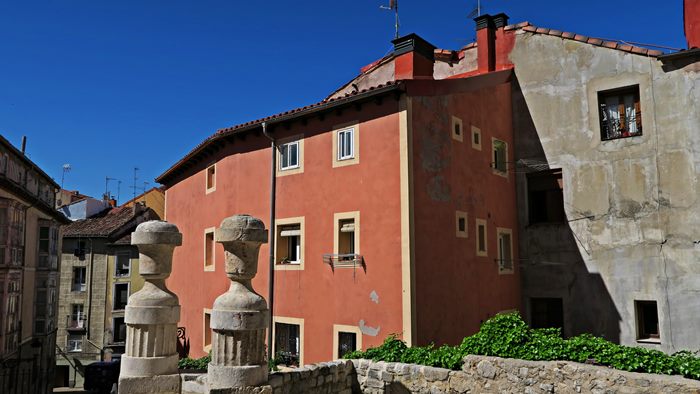
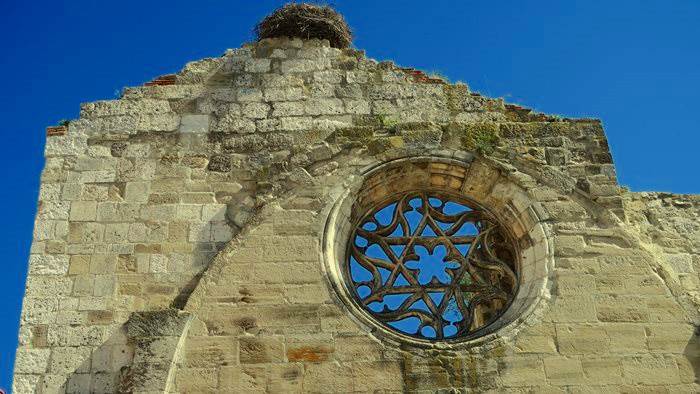
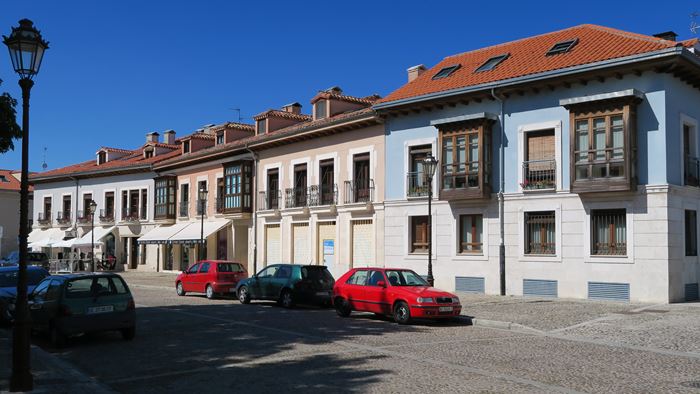
Being one of the most important stops on St. Jacob´s Way, Burgos is full of Christian architectural heritage and manner houses requiring at least a week to discover the whole beauty.
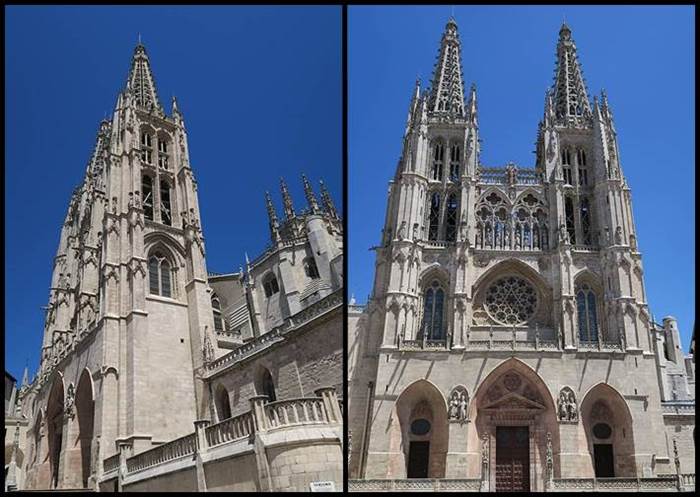
- Sta. Iglesia Catedral Basílica Metropolitana de Sta, María (Cathedral of St. Mary) – Gothic masterpiece founded in 1221 AD on the base of ancient Romanesque cathedral. Following French Gothic style was later enriched by flamboyant Gothic style and Renaissance and Baroque decoration. UNESCO Heritage since 1984.
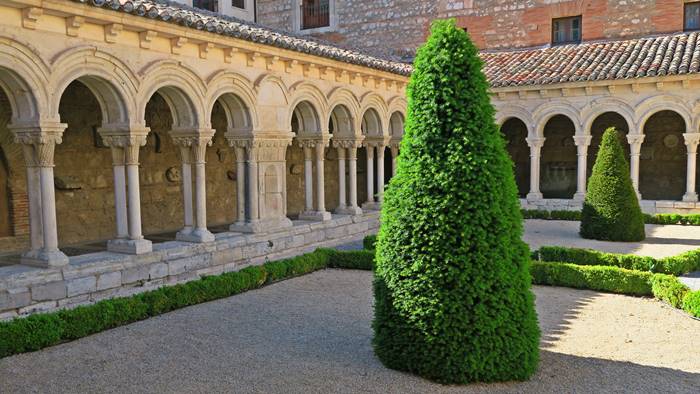
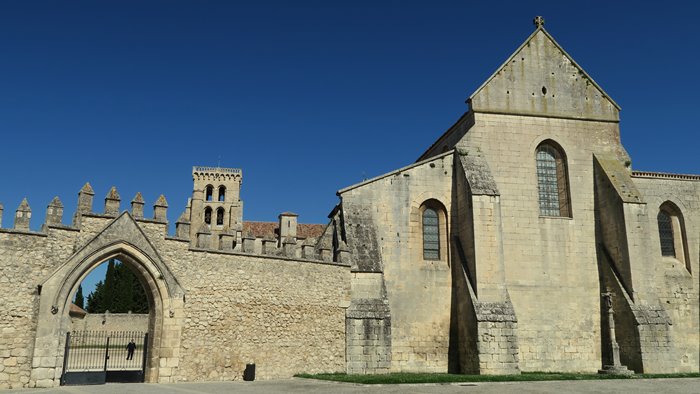
- Monasterio de las Huelgas (Abbey Las Huelgas) – impressive Cistercian complex founded in 1187 AD is shining various styles: oldest Romanesque Cloister, Proto-Gothic Church and newer Gothic cloister with Mudéjar elements.
- Cartuja de Miraflores (Miraflores Charter-house) – monastery of the Carthusians built at the end of 15th century in Isabelline Gothic style.
- Iglesia de San Gil Abad (S.Gil Abad Church) – Gothic church built in 14th century.
- Iglesia de San Esteban (San Esteban Church) – beautiful Gothic church from early 14th century.
- Iglesia de San Nicolás Bari (St. Nickolas of Bari Church) – Gothic church from 15th century famous above all for it unique Renaissance altar carved in limestone.
- Iglesia Sta, María La Real (St. Mary La Real Church) – another Gothic masterpiece dating 14th century.
- Iglesia de La Merced (Church La Merced) – built in late Gothic style at the end of Middle Age.
- Iglesia de San Lesmes (San Lesmes Church) – simple Gothic church built in 14th century.
- Iglesia de Sta. Águeda (Sta. Gadea Church) – Gothic church related with famous Medieval Romance when Cid Campeador forced King Alfonso to declare he was not part of his brother´s murder.
- Palacio Arzobispal (Bishops Palace) – Neo-Renaissance palace from 1916 AD replacing the old medieval one.
- Convento de Sta. Clara (St. Clara Convent) – medieval convent of Order of St. Clare dating 13th century.
- Convento de Sta. Dorotea (St. Dorothea Convent) – Augustinian Gothinc convent from 14th century.
- Palacio de Castilfalé (Castilfalé Palace) – manner house originally built by architect Juan de Vallejo, later modified by owners.
- Casa del Cordón – manner house originally in Gothic style, by the time slightly modified.
- Palacio de la Isla (Island Palace) – mix of Romantic and Gothic Revival styles of manner house dating 19th century had many different owners.
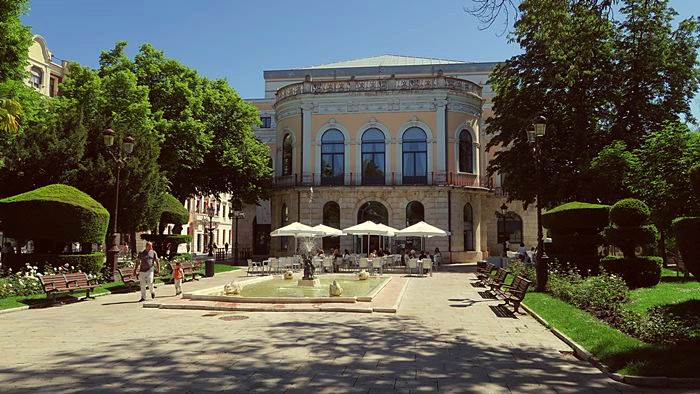
- Teatro Principal (main Theater) – built in 1858 AD in Neoclassical style, is a place of social reunions.
- Burgos Castle – topping the summit above the city was being built since 9th till 15th centuries, actually are left significant parts of construction.
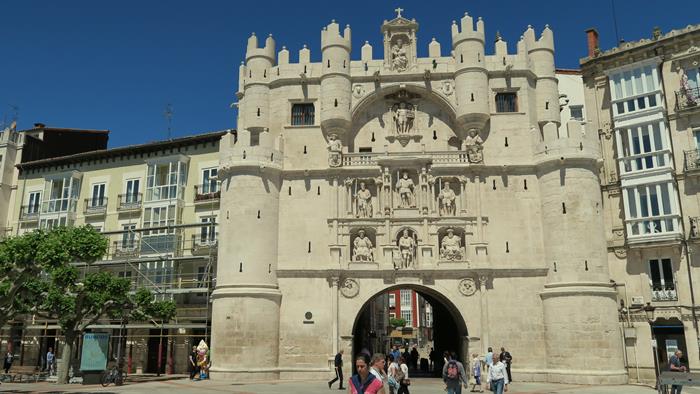
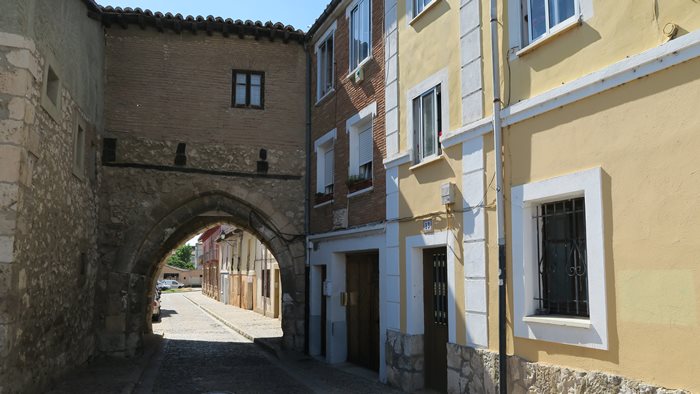
- Arco de Sta. María (St. Mary Arch) – well preserved medieval gate to the city.
- … and many more …
Entertainment
As a big city, the life in Burgos seems to be one long fiesta. Narrow streets full of bars and restaurants opened till early morning offer above all the spectacular local wines of Ribera del Duero – famous wine region well known for its stunning and well balanced products, but the whole gastronomy here is one MUST.
Apart some official fests and celebrations held place.
- Mercado Medieval – Medieval Market (May) – held place in Miranda del Ebro town
- Curpillos – combining sacred and profane meaning is gonna to be one of the most uniqueness festival in Spain
- Fiestas de San Pedro y San Pablo – fiestas celebrating all the locals out of the city
- Fiesta de La Batalla de Atapuerca – festive day commemorating historical battle in 1054
- Sonorama Ribera – music festival in Aranda del Duero
Bars & Restaurants
- Bar La Babia – perfect spot with lovely tapas just behind cathedral, opened since early morning.
- Norte GastroBar – excellent gastronomical life experience accompanied by lovely local wines.
- Mesón Los Herreros – typical Castilian bar-restaurant with amazing tapas and classic meals.
Accommodation
- Abba Burgos Hotel – perfect hotel, perfect place just above the center and under the castle.
- NH Hotel – another stunning place in excellent ancient building.
- Crisol Puerta de Burgos – lovely modern accommodation close to the center.
- Home San Gil – amazing apartments in the city center.
- Apartments El Cid – cozy apartments next to the city center.
References
 TRAVELLING SPAIN